Total Pageviews

Showing posts with label Bar Kochba. Show all posts

Tuesday, March 4, 2014

Archeological Finds in Israel Proving Bible History

Nadene Goldfoot                                            
                                                        The Exodus

In 2011, archaeologists Uncovered  the  ruins of  the biblical city  of Shechem, or as we know it today as Nablus,  in war-torn Israel.  The biblical ruin lies inside a Palestinian city in Judea-Samaria; the (West Bank,) where modern researchers are writing the latest chapter in a 100-year-old excavation that has been interrupted by two world wars and numerous rounds of Mideast upheaval.  Excavation on Shechem was started in 1913 to  1934 by German archaeologists.   From 1948 to 1967 this land was in Jordanian territory illegally and since the 1967 War is under Israel's control.  It's earliest walls date back to 2000 BCE.  It was under Egyptian control as early as the 12th dynasty BCE.  Our biblical patriarchs camped under its walls and it was pillaged by Simeon and Levi as told in Gen.34.   Later, it was in the territory of Ephraim, and was a Levitical city and a city of refuge as well as the center of the House of Joseph.  Joseph is buried there.  

Before naysayers say that the Old Testament is just a bunch of myths, they should check out what archaeologists have already proven.  

Nelson Glueck took a Transjordan survey which is thought by some scholars to show that the Israelite entry (Exodus into Canaan) did not happen earlier than the 13th century BCE.  My encyclopedia has Moses dying by 1271 BCE  and our history is that he was not able to enter the land as he was already 120 years old by then, so had chosen Joshua to lead the Israelites in.  So they are in agreement with this.  It would not have happened, say, in the 14th century.  

The Merneptah stele which is dated c. 1231 BCE sets a terminus ad quem   (to which there) for the Exodus.   Others thought the same and this resulted from the researches at Jericho, Bethel, Lachish, Tel Bet Mirsim, Hazor, etc.  
                                                                     

                        King  Solomon's Temple, from Description

Pottery study has identified the Philistines, and work at Gibeah (Tel el Ful and Jerusalem which we also call Zion has cast light on King Saul's and King David's reign, just as digs at Tel el-Hesi and  other places may have revealed King Solomon's chariot stables, and Tel el-Khalife, which is also called Ezion Geber, his trade and mining center.      

Bible study is illuminated by archaeology both in and outside what was then, Palestine, now mostly Israel.    The Mesopotamian discoveries of Ur of where Abraham was born do indicate a period of great floods which are reflected in the biblical Flood Story found in Genesis.  

Both the Egyptian Execration of the 20th and 19th century BCE and the Mari along the Euphrates of the 19th and 18th century texts show the patriarchal period.  Transjordan researches show contemporary Middle Bronze Age life as semi-nomadic.   

There are the well known Tel el Amarna tablets from the 14th century BCE which illumine the Israelite advent.  The Hammurabi  and similar legal codes of the 18th century give us the background of Mosaic legislation  and the legal habits of the patriarchal period.   

Edward  Robinson in 1838-1852 was an archaeologist who tried re-identification of biblical sites.  "Robinson traveled to Palestine in 1838 in the company of Rev. Eli Smith, leading to the publication of Biblical Researches in Palestine and Adjacent Countries for which he was awarded the Gold Medal of the Royal Geographical Society in 1842 He was elected a Fellow of the American Academy of Arts and Sciences in 1847. Robinson, together with Smith, made scores of identifications of ancient places including the tunnel dug by King Hezekiah shortly before the Assyrian siege of Jerusalem in 701/02 BCE, though the inscription at the southern end of the tunnel was to be found later.  The Robinson's Arch in the Old City of Jerusalem is named after him."  Edward was a farm boy from Southington, Connecticut born 4/10/1794.  He is a direct descendant of the Reverend John Robinson who sent the Pilgrims over from Holland to America on the Mayflower in 1620.  Most likely his Christian religion was the motivation for his digs in Palestine.  

He was followed by a lot of travelers in the 19th century.  F. de Suley carried out the first excavation of the Tombs of the Kings in Jerusalem in 1850.  The English Palestine Exploration Fund in 1865 started C. Warren's Jerusalem excavations in 1867 and a survey of Western Palestine was done in 1872 to 1878 by Conder and Kitchener.  His digs coincided with important work by C. Clermont-Ganneau, G. Schumacher and others.

By 1890, W. Flinders Petrie was at Tel el-Hesi and devised the system of pottery dating by looking at the stratification and cross dating it with Egyptian finds.  This started the methods used afterwards at Gezer, Samaria and other places.  They were able to go back to the Old Stone Age, or the Middle Paleolithic Age found in the Carmel and Nazareth skeletons, intermediate between Neanderthal man and Homo Sapiens. The Mesolithic's Middle Stone age culture is represented by the Natufian cave-dwellers, the first cultivators who lived around 8,000 BCE, and Neolithic, most strikingly by the Yarmukian settlement of Shaar ha-Golan.   

By 5,000 BCE, walled village settlement had evolved as in Jericho.  The use of copper began c 4,500 which started the Chalcolithic age in Jericho, Telulat Ghassul, and in the Beersheba district.  In 3,200-2,100 BCE we find the Early Bronze Age.  The Middle Bronze Age was from 2100 to 1500 BCE.  The Late Bronze Age was from 1500 to 1100 BCE which had walled towns that were spread out as revealed by excavations at Bet Yerah.  Megiddo, Jericho, Bet Shean, Tel Bet Mirsim, and so on are examples of that period.  

Research has even revealed the famous Hyksos of the 18th century BCE with fortresses at Hazor, Shechem and Horite or Hurrian migrations from the 17th century and growing Mediterranean contacts under Egyptian rule such as in Bet Shean from the 1500 to 1100 BCE period.  

Discoveries of the Ugarit (Ras Shamra) include  old Canaanite texts from 1880 to 1200 BCE. They shed light on the earliest poetical parts of the Bible.  Epigraphical finds at Sinai, Gezer Calendar, Siloam, the Moabite Stone, Lachish letters and the Arad Ostraca show the development of the Hebrew alphabet.  

Archaeology in Samaria has uncovered the palaces of Kings Omri, Ahab, and Jeroboam II and show the Phoenician affinities of their culture.  Many sites such as Megiddo and Lachish have  given us dates and show the extent of the destruction that came before the Babylonian exile.  

Excavations at Samaria, Beth Zur, Marisa, Beth Shean and Transjordan Tobiad Palace of the 2nd century BCE date form the Hellenistic period of the 3rd to 1st centuries BCE.  

The later Second Temple Period has brought researches into the tombs and ossuaries of the Jerusalem area and into the Herodian structures of the southern and western walls of the Temple area, the Jerusalem Citadel, Mamre and Masada with its remains of Herod's palace, the Zealot living-quarters and the Roman siege-lines.  
                                                                                 

Finally, in the 1st century belong the DEAD SEA SCROLLS with their affect on Bible study and knowledge of Jewish sectarianism.  Another important find in caves of the Judean desert was the correspondence of the Bar Kokhba period.  He was the leader who fought against the Romans from 132-135 CE but was finally killed.  

The catacombs at Bet Shearim gave us information about Jewish art, language, and religion of the 2nd to 5th centuries CE.  The Israel Government Department of Antiquities has from  1949 carried out the supervision and protection of antiquities, investigation of chance finds and systematic excavations.  The Israel Exploration Society has worked at Bet Shearim and Masada.  

PS 3/5/14:  Besides all this, check out Simcha Jacobovici and his TV programs where he shows what he has discovered and worked on.  Entertaining as well as factual, he's a delight.  Simcha Jacobovici was born on April 4, 1953 in Petah Tikva, Israel. He is a producer and director, known for The Naked Archaeologist (2005), The Lost Tomb of Jesus (2007) andCharging the Rhino (2007).

50 people from bible confirmed archaeologically from the reference-mosaic magazine cites below.  

A web-exclusive supplement to Lawrence Mykytiuk's “Archaeology Confirms 50 Real People in the Bible” feature in the March/April 2014 issue of BAR.  Purdue University scholar Lawrence Mykytiuk lists 50 figures from the Hebrew Bible that have been confirmed archaeologically. The 50-person chart in BAR includes Israelite kings and Mesopotamian monarchs as well as lesser-known figures.


http://mosaicmagazine.com/picks/2014/03/right-out-of-the-bible/?utm_source=Mosaic+Daily+Email&utm_campaign=e9a97c3ced-2014_3_5&utm_medium=email&utm_term=0_0b0517b2ab-e9a97c3ced-41144429
Resource: http://en.wikipedia.org/wiki/Edward_Robinson_(scholar)
The New Standard Jewish Encyclopedia
http://www.foxnews.com/scitech/2011/07/22/in-palestinian-city-diggers-uncover-biblical-ruin/


Friday, July 26, 2013

Jerusalem Facts You May Not Know

Nadene Goldfoot                                                                     

King David made Jerusalem his capital more than 3,000 years ago, and Jewish people have lived in this city for over 3,000 years.  It was also well known as "The City of David."  Jews have constituted the largest single group of people living in Jerusalem since the 1840's.  In 1844 there were 7,120 Jews, 5,000 Muslims and 3,390 Christians.    This city has played a central role in Jewish existence.  The Western Wall in the Old City is the last remaining wall of the ancient Jewish Temple and has been the object of Jewish veneration and a focal point for Jewish prayer.

Three times a day since 70 CE Jews have prayed "To Jerusalem, thy city, shall we return with joy."  Israel became reborn on May 14, 1948, but Jews couldn't enter east Jerusalem.   Jews have united the whole city through the terrible war when they were attacked by neighboring Arab countries in  1967.

Muslims have their own special places which are outside of Israel.  Their cities of reverence are Mecca or Medina in Saudi Arabia.  Jerusalem has no major Islamic importance.  They are only interested in the majestic Dome of the Rock that is in Jerusalem.  Jerusalem has never served as a provincial capital under Muslim rule.  Nor was it ever a Muslim cultural center.  If anyone has the audacity to say that Jerusalem need not be the capital of Israel and are Americans, then they should consider someday losing Washington DC.   How would they feel to return to the land and consider having to take another city as their capital when they have always had Americans residing in Washington DC.  Does that make sense?  The USA's history started only almost 400 years ago with the 1620 ship, Mayflower landing.  Israel's history goes back to the 2nd millennium BCE which would be about 4,000 years ago.

Let's look at Jerusalem's population history with Jews and Muslims living there. Muslims lived in the East section, and Jews lived in the rest of Jerusalem.  It is no longer a divided city but united.
1876- 12,000 Jews and 7,560 Muslims
1896- 28,112               8,560
1922- 33,971             13,411
1931- 51,222             19,894
1948-100,000            40,000
1967-195,700            54,963
1990-378,200          131,800
                                                                         

The former mayor of Jerusalem, Teddy Kollek had said that, "Throughout centuries of exile, Jerusalem remained alive in the hearts of Jews everywhere as Jerusalem was the focal point of Jewish history.  It is the symbol of ancient glory, spiritual fulfillment and modern renewal.  This heart and soul of the Jewish people engenders the thought that if you want one simple word to symbolize all of Jewish history, that word would be, Jerusalem."

Leon Uris and his wife, Jill, wrote in Jerusalem.  "Jerusalem "has known only 2 periods of true greatness, and these have been separated by 2,000 years.  Greatness has only happened under Jewish rule.  This is so because the Jews have loved her the most, and have remained constant in that love throughout the centuries of their dispersion...It is the longest, deepest love affair in history.  Uris wrote "The Source", a history of Israel through finding artifacts in digs.

What has happened to Jerusalem since 1947?  The UN took up the Palestine question then and they recommended that all of Jerusalem be internationalized.  The Vatican and other Catholic delegates wanted this, but the real reason for this decision was the Soviet Bloc's need to embarrass King Abdullah and his British patrons.  It was this king who would take Judea and Samaria in 1948 illegally even though it was designated to become part of the Jewish National Home, passed by all in the League of Nations.

The leaders to be of Israel, the Jewish Agency, then agreed in 1947 to this internationalization hoping to protect their dear city from conflict.  The Arab states were against the idea as well as the partition plan itself.  They wanted it all.  Abdullah then invaded in 1948 and occupied east Jerusalem along with Judea and Samaria.  Jordan's army drove out thousands of Jews whose families had lived in the city for centuries in exile.  The UN's partition plan and internationalization went up in smoke.

The Arabs had rejected UN Resolution 181.  The UN established the UN conciliation Commission for Palestine on December 11, 1948 after Israel's birth on May 14, 1948.  Prime Minister David Ben-Gurion said that Israel would no longer accept the internationalization of Jerusalem.

The city was divided between Israel and Jordan from 1948 to 1967, when the Arabs lost their attack on Israel in the 67 War.  During this period between 48 to 67, Israel had made its capital in the western part of Jerusalem while Jordan occupied the eastern section.  There had been no peace pact yet with Jordan, so they were officially in a state of war, like all the other Arabs were.  The city was divided with concrete walls and bunkers, barbed-wire fences, minefields and other fortifications that military people use.
                                                               
1967 after Six Day War, Jews could finally after 20 years see Jerusalem once again.  Here they are celebrating with dancing.  

When the 1967 Arab attack started, Israel pleaded with Jordan not to be a part of the attack and to stay out of the war, but they didn't listen.  Within about 2 days, the IDF drove out the Jordanians and after the war Israel moved to unite the city.

Steven Schwebel, international legal scholar, wrote that because Israel was defending itself from aggression in the 1948 and the 1967 wars, it has a better claim to sovereignty over Jerusalem than that of its Arab neighbors.  The land was all to be the Jewish National Home once again as it had been long ago.

There has been no other people who have been picked on as much as the Jews.  They have suffered from anti-Semitism since they were exiled in 70 CE by the Romans till today.  Since Jews have been such an anathema to the world, the least it can do is back their right to inhabit their old homeland.  The UN has been doing quite the opposite.  In every which way they back the Arabs who would like to see Israel disappear and who have taken it upon themselves to finish Hitler's goal.  Every country in the UN has a history of anti-Semitism, so it's like asking the fox to become a vegetarian.  One nation only has stood up to the injustice against Israel, and that has been the USA.
                                                                     
Back in biblical history, Joshua entered Canaan with the Israelites in 1320 BCE and defeated the Canaanite king of Jerusalem, Adoni-Zedek.  The city was then an independent city between the tribes of Benjamin and Judah.  In the 12th century, Jebus-Jerusalem maintained its independence with some Philistine help, until its was captured by David in about 1010 BCE and became the capital of a united Israel.  This is documented in II Samuel 5: 6-8; and I Chronicles 11:4-6.  King David was lenient with the Jebusites.  He added the fortress of Zion and a House of Heroes for his guard.  Then he built a tomb inside the city for himself and his dynasty.  The Ark of the Covenant was transferred to Jerusalem and it became the religious center.  His empire reached from the Red Sea to the Euphrates.

King Solomon, his son, (970-930 BCE) added to the city with his commercial ventures and heavy taxes.  He added the Palace and the Temple.  It was then that Jerusalem truly became the religious capital.  When Solomon died, the northern tribes seceded.  Judah was created out of Israel who kept Jerusalem as their capital.  The Davidic dynasty lived in Judah.  All went well until it's destruction in 701 BCE by Sennacherib of  the Assyrians. The city fell again in 586 BCE to Nebuchadnezzar of the Babylonians who deported most of the population and destroyed the temple and Royal Palace.  Fifty years went by and most of the exiles returned and rebuilt the Temple in 519 BCE.  Jerusalem then became the capital of a Persian province but was autonomous in internal matters under the rule of the high priest of the House of Zadok.  All nobles and a 1/10th of the of the people were brought in to fill the half-empty city. Theocratic rule continued in Hellenistic times when the city was prosperous.

The city was captured by the Parthians in 40 BCE and fell after a long siege to Herod in 37 BCE who was a Roman vassal who was the ruler.  He built a palace in the NW quarter of the city with 3 giant towers.  One is still there and is called the "Tower of David."  He even rebuilt the Temple with a huge surrounding esplanade.  This outer wall  still stand and is called the Western Wall.  It had been called the "Wailing Wall."  Herod died in 4 BCE which caused the city to be ruled by a Roman Procurators except when Agrippa I reigned from 41 to 44 who built a 3rd wall to the North.  When the procurator, Pontius Pilate was in charge, Jesus was crucified in Jerusalem  in 29 CE.  Roman rule was unbearable and the people revolted in 66.  They were independent for 3 years when it was again besieged by the Romans under Titus and fell in 70 CE.  The Temple and most of the buildings were destroyed.

Bar Kochba revolted from 132 to 135 and Jerusalem was then liberated.  The Roman emperor Hadrian had had it rebuilt as a Roman colony, Aelia Capitolina and forbade Jews  to near it with a death decree if they did.

Finally, the Roman Empire was Christianized and under Constantine, Jerusalem became a Holy City for their new religion.  His mother, Helena, visited Jerusalem in 325 and had the Church of the Holy Sepulcher built in 335.  Now it became a city of churches and monasteries, pilgrimages and religious disputes.  In 363, Emperor Julian tried to restore the Temple unsuccessfully.  In 614, it was occupied by the Persians who were assisted by a Jewish force, but by 628, Byzantine rule was restored by emperor Heraclius.

In 638, the city fell to Caliph Omar who set up a place of prayer in the Temple esplanade, which was rebuilt in 691 as the Dome of the Rock by the Umayyad caliph Abed-el Malik.  The Arabs allowed the Jews to return, but the city began to decay after they transferred the center of Abbasid rule to Baghdad in 750.  The Fatimids in the 11th century built the 2nd mosque, El-Aksa, on the Temple site.  Then in 1099 Jerusalem was invaded by the Crusaders  led by Godfrey of Bouillon.  They made Jerusalem a capital of the Latin Kingdom.  Not for long, though, because by 1187 the Ayyubid sultan Saladin took the city for Islam again and it remained in Muslim hands.  Under the Ottomans, it decayed and in the 18th and 19th century the population sank below 10,000 and part lay in ruins.
                                                             
                              Paratroopers see Western Wall for first time after 1967 War

The Jewish community was destroyed by the Crusaders and was almost non-existent in the 13th century, but not for long.  The Spanish Inquisition of 1492 caused many Sephardim Jews to pour into Jerusalem when the government was restricting their entrance.  In 1625 the local pasha Muhammad ibn Farukh killed many of them.  A revival of population started in the 1880's when the first aliyah from Russia returned.  By 1838 the population rose from 11,000 to 68,000 with 50,000 being Jewish.
                                                                     
Women at Western Wall in early 1900s by looks of clothing  ..

Who does Jerusalem like best?  The Jewish people.  Why?  Because they take care of her.  They love her.  Nothing was done with Jerusalem when the Jews were forced out.  It lost its special aura, its sheen, its specialty.  It was just a city without the Jews.

Resource:  The New Standard Jewish Encyclopedia
Myths and Facts-a concise record of the Arab-israeli conflict by Michell G. Bard, Joel Himelfarb


Friday, June 28, 2013

Archaeology Proves Israel's Past History

Nadene Goldfoot                                                                      

Archaeology has helped to uncover facts about the Jewish past in Eretz Yisrael over the last 3,000 years.  Archaeologists are uncovering the whole story which goes back to Canaan, and Christianity.  Found has been the head of a clay statue from the Neolithic period that was found in Jericho.  A pitcher with a Greek decoration was found at Taanach.  Representation of a menorah was found in the ruins of Gadera.
                                                                             
Israel's Department of Antiquities and Museums is responsible for safeguarding the sites of archaeological excavations and their antiquities which are protected by law.  It carries out  country-wide surveys and prevents damage to sites from development and building, looks after the mapping and registration of new finds and supervises the archaeological work of local and foreign expeditions.

2013's February started off with a dig finding an ancient wine press in Jaffa from the Byzantine period.  In April was discovered a ritual bath from the 2nd Temple period.  May uncovered a dig of a 2,000 year old stone quarry in Jerusalem and a 1,500 year old Mosaic in southern Israel.  This month of June uncovered 2,000 year old cooking pots in Jerusalem.  "
  • "Three complete cooking pots and a small ceramic oil lamp were uncovered inside a small cistern in a drainage channel that runs from the Shiloah Pool in the City of David to Robinson’s Arch near the Western Wall..  A distant cousin, Chaim Goldfus, PhD  was involved in this recent find."  
What they are not in control of is the Muslim site in Jerusalem of the Mosque of Omar or Dome of the Rock which was purposely built in the center of the Jews' 2nd Temple area by the Caliph Abed al Malik in about 738 CE to replace the temporary structure set up by the Caliph Omar a century earlier.  It is situated on the traditional site of Mt. Moriah, where the Torah says is the site where Abraham offered up Isaac as a sacrifice.    This seemed to start a Muslim tradition of putting their stamp on an area saying they were taking over with their Muslim religion.  In this way they thought they were burying the older religion by building theirs over it.  Moshe Dayan (1915-1981) Israel's Minister of Defense, allowed the Muslims to have authority over a very precious Jewish site, so what is going on under it is unknown.
                                                                         
                                         Carmel's Caves in Israel, Neanderthal Findings
Archaeological digs began in the 19th Century CE and had a boost after Israel's birth in 1948.  In the Jordan Valley, Galilee and the Carmel Range, bones of early man, the Neanderthals,  were found with tools and the remains of animals that he hunted.  The oldest discovered date back to over one million years ago and was named Tabun.who lived 103,000 to 80,000 years ago.    The next oldest found was Amud who lived from 55,000 to 47,000 years ago, and the earliest was Kebara who lived 60,000 years ago.  Neanderthals were found to have lived from 130,000 to 28,000 years ago.  The company, 23&Me can find the % of Neanderthal genes in people who take their dna test, for most of us do carry some of those genes. Since Neanderthals were not found in Africa, the average European will have about 2.5% Neanderthal genes, which would include Jews since 3 digs have discovered their bones in caves in Israel.    

Bits of Canaanite settlements in the 3rd and 2nd millennia BCE were found in the biblical sites of Hazor, Megiddo, Ashdod, Jerusalem and Shechem.  These have proved to be the settlements of the Israelites on their return from Egypt towards the end of the 2nd millennium BCE and especially after the establishment of the kingdoms of Israel and Judah.  The digs provide many details about the daily life, architecture, arts and forms of religious worship that went on in that period.

Remains form the 2nd Temple days, especially the Hasmonaean period through the Jewish revolt against the Romans in the 1st century CE were unearthed in Jerusalem, Caesarea, Beit-Sha'an, Tiberias and Jaffa.  The most impressive relics of fortresses in the Judaean Desert were the Masada and Herodion, which were bases for the revolt which ended in 70 CE with the devastation of the land and its conversion into a Roman province.

Archaeologists couldn't get into Jerusalem until 1967.  Since then they have uncovered detailed evidence of the city's fortification and the magnificent public and religious edifices.  They also saw how its burning and capture by the Roman legions left its evidence.  Traces of the camp of the Roman 10th Legion and remains of the Roman Jerusalem where found.  They had named the city "Aelia Capitolina" in the 2nd and 3rd centuries and this evidence was found.
                                                                     
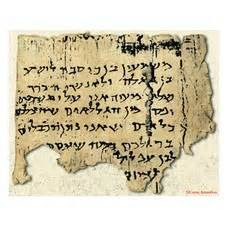
In the Judaean desert are caves which were explored that led to the discovery of the "Letters of Shimon Bar-Kochba, the commander of the 2nd Jewish revolt against the Romans in the 2nd century (135 CE).  This event is comparable in historical importance to the discovery of the Dead Sea Scrolls.

The unbroken presence of the Jewish community throughout the Byzantine period of the 4th to 7th centuries was uncovered by finding beautiful synagogues in the Galilee, Judaea and in the south.  Evidence of the new Christian community that developed at that time was also discovered.

Great edifices built by the Moslem conquerors in the 7th century and after had  been uncovered in the early 70's.  .Found were the palaces of the Omayyad rulers in Jerusalem and the antiquities of Ramla.

The Christian Crusaders' period of knights who came and conquered and held the Holy Land between the 11th and 13th centuries is now better known and understood as their fortresses at Akko (Acre), Caesarea, Jerusalem and Kochav Hayarden have been cleared and reconstructed.

Mamluk and Turkish remains from the Middle Ages at the beginning of the 20th century have been investigated.  Archaeological activity has been expanded and sites are connected with neighboring cultures.  The Phoenicians on the northern seashore, or the Roman period Nabatean settlements in the Negev were receiving closer treatment in the early 70's.
                                                                   
This is a mural of the Jews brought into Egypt as slaves found in Egypt and taken by my cousin, Denise on her vacation there.  This backs up the Exodus story in the Torah.

Outside of Israel has also been found evidence of the Jewish civilization.  Discoveries in Egypt of the 5th to 4th centuries BCE of Aramaic Papri at Elephantine (Yeb), numerous Greek and a few Hebrew papyri of hellenistic and Roman times, the Edfu ostraca, and the Jewish temple at Leontopolis.  Jewish inscriptions of the hellenistic or Roman periods exist in most Mediterranean lands.  The Jewish catacombs in Rome and Carthage and tombstones in the Crimea exist.  Synagogues of the classical period have been found in Greece, Yugoslavia, Italy, Asia Minor and Syria, especially Dur-Europos, remarkable for its biblical frescoes are proof of existence.

The Palestinians have refused to accept the fact that Jews were in the land long before they were.  This is part of their political brain washing of their people, that only they have the right to the land and that Jews are foreigners.  However, they cannot dispute these findings that show we were here long, long ago and have come home to roost.  .  

Resource:  Facts About Israel: Division of Information, Ministry for Foreign Affairs, Jerusalem
http://anthro.palomar.edu/homo2/mod_homo_2.htm Neanderthals, great site.
http://www.jewishvirtuallibrary.org/jsource/Society_&_Culture/geo/Mount.html  Excellent information
The New Standard Jewish Encyclopedia
http://www.mfa.gov.il/mfa/israelexperience/history/pages/archaeological%20excavations%20in%20israel%202003.aspx

Tuesday, May 21, 2013

THE Land, Ha'Aretz- PALESTINE

Nadene Goldfoot                                                                      

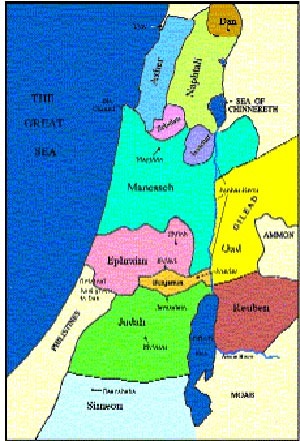
Territories for Simeon, Judah, Dan, Benjamin, Reuben, Ephraim, Gad, Manasseh, Issachar, Zebulun, Asher, Naphtali and Manasseh

Palestine was Jewish land.  It was a basic tenet to Christian theology that the loss of the Jews' national independence was an act of G-d.  It was designed to punish the Jewish people for their rejection of "Christ." Christians felt they had to help G-d so that some emperors' minimal criteria of oppression and restriction of the Jews was always maintained as well as the maximum sort, such as in the Spanish Inquisition of 1492.

Eretz Yisrael (Israel and Judea) was the country of the Jews of which even the size and geography is outlined in the Torah/Bible.  That it was his country was a part of his theoretical exercise, an article of his theology and a sophisticated political feeling.  It was a pervasive and inextricable part of his daily life.

Jewish prayers and Jewish literature are filled with the love and longing for and the feeling of belonging to Eretz Yisrael and has been going on for the past 4,000 years.  It's part and parcel of our DNA.  It's in our soul.  "There is no theme so pervasive in the literature of any other nation," no theme that has yielded so much thought and feeling and expression as the relationship of the Jew to his land in Jewish literature and philosophy.  After all, G-d had led Moses back to the land and through Moses directed the people of the Exodus  where they should settle.

Jerusalem was taken and burned in 70 CE by the Romans.  The Jews' attachment to this land has never wavered.  Though many of the Jews were led away then as slaves, there were others, especially in the Galilee, who had never left.  Jewish life was maintained in the country.

In 135 CE, Simon Bar Kochba led a revolt against the Romans which failed. It had been the fiercest and longest revolt ever faced by the Roman Empire.  There were 580,000 Jewish soldiers that died defending their land.  Many civilians died of starvation and pestilence.  985 Jewish villages were destroyed.

 That was over 60 years after the 2nd Temple was destroyed.  The Romans decided to waste the country then in a determined effort to stamp out the Jewish identity.  They plowed over Jerusalem at the direction of Emperor Hadrian.  Then they renamed it Aelia Capitolina, and Judea was renamed Syria Palaestina.

Banished from Jerusalem, Jews went to the Galilee in the northern section of their land.  Refugees returned.  Jews sold into slavery were redeemed and returned.   There arose some of the most important creativity of the Jewish people when the Mishnah and the Jerusalem Talmud were finished.  Most of the people farmed the land.

The Roman Empire became Christian by the 4th century CE.  Their policy was to stop any spark of Judaism that might show up.  Even so, 43 Jewish communities in Palestine in the 6th century were revived:  12 towns on the coast, in the Negev and east of the Jordan,  and 31 villages in Galillee and in the Jordan Valley were reborn.  National restoration was in the hearts of the Jews.  In 351 they staged another revolt which was put down.  In 438 the Empress Eudocia ended the ban on Jews' praying at the Temple site.

This caused the Jews to think that a period of restoration had finally come and they made an alliance with the Persians who invaded Palestine in 614.  Jews fought at their side and overwhelmed the Byzantine garrison in Jerusalem.  They governed the city for the next 3 years.  The Persians made peace with Emperor Heraclius and Christian rule was reestablished.  This meant that Jews were banished from the city again.  The Byzantine persecution started up again but was short-lived because in 632, when Mohammed died, the Moslem Arab invaders came and conquered the land.  By 640, Palestine had become part of the Moslem Empire.

They ruled for 450 years, first under the Omayyads (mostly all Arabs) who governed tolerantly from Damascus, and then under the Abbasid dynasty (mostly all Turkish) who governed from Baghdad.  So Jews were governed either tolerantly or persecuted and then ruled by the Fatimids from Cairo.  The Moslem Arabs took away lands from the Jews that they had held onto for 20 generations after the fall of the Jewish state.  The Crusaders came after them and had ruled Palestine or parts of it for a little more than 2 centuries and it was they who massacred the Jews in the cities.  Under the Moslems and Crusaders, the Jewish communities of Palestine held on with their prayers and chutzpah and survived.  The Jews had been some of the best fighters against the Crusaders.  When the city of Jerusalem fell, the Crusaders had gathered the Jews up in a synagogue and burned them.  Haifa was defended by the Jews for a month from June to July 1099.  In that year, 1,000 years after the 70 CE fall of Jerusalem, there were Jewish communities that had sprung up all over Ha'aretz (Palestine).  50 of them remain well known, such as Jerusalem, Tiberias, Ramleh, Ashkelon, Caesarea and Gaza.

In 1516 the Ottoman Turks were tolerant and fairly  friendly towards the Jews.  30 Jewish communities were recorded then:  Haifa, Sh'chem, Hebron, Ramleh, Jaffa, Gaza, Jerusalem and many in the north.  Their center was Safed (Tzfat) which became the largest in Palestine and took on the spiritual leadership of the whole Jewish world.  The mystic Caballa was developed.  8,000 to 10,000 Jews lived here in 1555 and the population grew to 20,000 or 30,000 by 1600.  Some of the Galilean villages survived, showing that Jews clung to the land for 15 centuries in succession.  Jews brought in the first printing press into Palestine, and Asia, for that matter.  It was brought to Safed and printed in Hebrew.  Maybe it was their prosperity that caused Sultan Murad III in 1576-77 to deport 1,000 wealthy Jews from Safed to Cyprus, where he needed some economic assistance.

                                          Chronology of Jews in Ha'aretz

1250 BCE    Moses' appointed leader, Joshua, led the 600,000 Israelites into the Land of Israel
1000-922 BCE  King David and son Solomon ruled a united Jewish kingdom in Israel
721 BCE           10 of 12 tribes of Jacob  are defeated by Assyrians and taken into exile, slavery
586 BCE           Babylonians defeat kingdom of Judah and exiled leaders, people to Babylon
539 BCE          Cyrus the Great of Persia sends Jews back to Israel, live and rebuild temple
458 BCE          Ezra leads exiled Jews back to Israel
332 BCE          Alexander the Great conquers Israel
167 BCE          Jewish Maccabees revolt against Greek  Antiochus IV Epiphanes
37-4 BCE        Herod, appointed by Rome, ruled over Judea, works on Temple
70 CE              Titus, emperor of Rome, crushes Jewish revolt
135                  Bar Kokhba Revolt
1096          First Christian Crusade massacre Jews across France, Rhineland, Bohemia on way to Jerusalem
1146                Second Christian Crusade, Jewish communities attacked
1453               Ottomans conquer Constantinople, invite Jews to return to the city
1880-1897      Theodor Herzl holds 1st Zionist Congress for return to Eretz Yisrael, Jews have returned
1904-1914      2nd Aliyah, 40,000 Jews from Russia return to Ha'Aretz, 3rd and 4th aliyote followed
Nov 2, 1917   Balfour Declaration of Jewish National Homeland Declared
May 14, 1948  State of Israel Declared; 600,000 Jews in Population
2013               Israel population :  6 million Jews, 1.7 million Arabs

There is no other people in the world who have maintained their love for their original land as much nor as long as the Jews have, nor has there been a people from the ancient days that have existed for so long as this people maintaining their religion.  Though Judaism has grown along with the generations, the main concept has remained the same.  It is not an "old time" religion but one that is prevalent in today's age along with its people who are  among the most creative and intelligent. Judaism is based on social righteousness.   Jews in Israel continue to cling to their beloved Ha'Aretz; the tiny speck of land of Israel;   the granted 20% of what used to be theirs.

Jews were chosen by G-d to carry out a heavy duty, and only G-d knows how hard they have tried to do this.  They were chosen not because they were the best of all people but because they had such a stubborn trait, a stiff-necked people.  They had been chosen to carry the message of G-d's law to the world, based on the covenant between G-d and Abraham and renewed at Sinai with Moses.  Isaiah described Israel as  those whose sufferings will bring salvation to the world.  One thing we know.  Jews have long suffered in the world.  Israel was said to be a kingdom of Priests and a holy nation.  How many people of the world still scoff at the Golden Rule today?

Resource:  Battleground-fact and fantasy in Palestine by Samuel Katz
Jews and Power by Ruth R. Wisse
The Source by Leon Uris

Monday, May 13, 2013

How Were the Jews Treated When Jerusalem Fell in 70 CE As Told by Josephus

Nadene Goldfoot                                                                       

" On the 10th of August, in A.D. 70 -- the 9th of Av -- in Jewish reckoning, the very day when the King of Babylon burned the Temple in 586 B.C., the Temple was burned again. Titus took the city and put it to the torch, burning the Temple."

 Josephus( 38 CE-100 CE)  was a 32 year old captive general and also a Cohen from Judah. He had gone to Rome in 64 on a semi-public mission.  The Jews revolted in 66 and he was regarded as an expert in political affairs and was sent as a representative of the government to Galilee where he assumed military command.  He was captured by the Romans in Jotapata and went over to the Romans- a turncoat.   He was made a historian for the Romans.

  He tells about Jerusalem's fall in 70 CE.  It had been under siege. The people were rounded up from remote places and were shut up as in a prison.  The Roman army surrounded the city.  Many died.  The Romans had slain some of them, some they carried away as captives, and with others they made them search for underground passageways with Jews in hiding  and when they were found,  they were slain.  2,000 people were found slain, partly by their own hands and party by one another, but destroyed by famine. The stench from dead bodies  was intolerable.  Most of the Romans got away from the bodies but the greedy ones went among the dead that lay in heaps and walked upon them while searching for wealth.  Many  of those that had been put in prison by the tyrants were now brought out.  Simon, a leader of the Jews was among them.  He had been forced to surrender.  He was reserved for the triumph march and when there,  was to be killed.  The Romans then set fire to the extreme parts of the city and burnt them down and entirely demolished its walls.

 This attack on Jerusalem was  the 2nd time it had been desolated. It was the 6th time it had been taken.  This time it happened in the 2nd year of the reign of Vespasia on the 8th day of the month of Gorpieus (Elul),  Shishak, king of Egypt was first, Ptolemy, the son of Lagua, then Antiochus, Pompey, Sosius and Herod took the city but preserved it, but before all these, the king of Babylon conquered it and made it desolate 1,468 years and 6 months after it was built.  The first king (2000-1550 BCE )was Melchi-zedek, a Canaanite and called it Salem or Jebus.  King David of the Jews fought the Canaanaites and he and his people lived there.  It was demolished entirely by the Babylonians 477 years years and 6 months after him.  From King David to this destruction under Titus was 1,179 years, but from its first building till this last destruction were 2, 177 years.  The conquerors did not take into account its great antiquity, vast riches, diffusion of its nation over all the habitable earth or the greatness of the veneration paid to it on a religious account that been sufficient to preserve it from being destroyed.  The siege of Jerusalem then ended.

Caesar gave the order to demolish the entire city and temple but leave as many of the towers standing as they were of the greatest eminency,  such as the towers called Phasaelus, Hippieus and Mariamue.They also left  much of the wall that  enclosed the city on the west side.  It was spared so as to afford a campground for the soldiers  as were the towers also spared to demonstrate to posterity what kind of city it was and how well fortified it was which the Roman valour had subdued.  The 10th Legion was left as a guard. with some horsemen and companies of footmen.   The 12th Legion had been overcome by the Jews under Cestius, their general.  He expelled them out of all Syria and sent them to Melesine, near the Euphrates which was in the limits of Armenia and Cappa Jocia.  Titus was going to Egypt. so he went to Cesarea by the seaside and laid up the rest of his spoils in great quantities and gave the order that the captives should be kept there for the winter season which hindered him then from sailing into Italy.

While Titus was sieging Jerusalem, Vespasian boarded a merchant-ship and sailed from Alexandria to Rhodes .  There he sailed away in ships with 3 rows of oars and was received in 3 cities he passed by, from Ionia into Greece to Corcyra to Iapyx and then journeyed by land.  Titus marched from Cesarea to Cesarea Phillippi and put on many shows of a great number of captives that were destroyed by such acts as throwing a great number to the wild beasts, and others by the multitudes were forced to kill one another.  While watching the arena slaughter, he heard of the seizure of Simon, the son of Gioras who had taken his friends with him.  They were all stone cutters.  They had their iron tools and provisions and let himself and them down into a cavern underground.  They had reached the spot where they had to dig their way to continue so that they could rise and get into a safe place.  Simon put on a white frock and buttoned over that a purple cloak and appeared above ground.  The army was there and he found out what had happened to his people.  He was bound up.  He voluntarily gave himself up and was taken to Caesar.

While Titus was at Cesarea, he celebrated the birthday of his brother Domitian and had a 2,500   Jews killed in his honor.  Some had to fight against beasts in the arena, some were burnt, and others had to fight each other.  The Romans killed 10,000 this way.  Caesar ambled onto Berytus, a city of Phoenicia and a Roman colony and stayed a long time celebrating his father's birthday where he had a multitude of the captives here destroyed the usual ways.  The Jews in Antioch were in danger.  Josephus mentions, " For as the Jewish nation is widely dispersed over all the habitable earth among its inhabitants, so it is very much intermingled with Syria.by reason of its neighborhood, and had the greatest multitudes in Antioch by reason of the largeness of the city.

Titus Caesar was getting ready to enter Rome.  Everyone came out on the road to greet him, wives, children, all.  He could barely reach the royal palace for all the people in the way.  He made his sacrifices of thanksgiving to his household gods for his safe return to the city.  The throng of people feasted and drank in Antioch and begged him to remove all the Jews of their city.  Jerusalem fell and all Jews everywhere were in jeopardy. The Germans revolted from the Romans but were subdued.  The Samaritans overran Mysia but were compelled to return to their own country again.

Within three years of Jerusalem's liberation under the Bar Kochba revolt in 132 CE, Rome marched against the rebels and killed Bar Kochba in 135 CE. The Sanhedrin officially labeled him a false Messiah and Jerusalem was again in Roman hands. Jewish Jerusalem was once again blotted out and Aelia Capitolina was built on its site as had been planned. Because the war had cost the lives of Roman heroes, the Jews were thenceforth forbidden to enter Jerusalem upon penalty of death. Hadrian attempted to destroy every connection Jerusalem had with the Jewish people. Christians of Jewish background were also excluded from the city, but gentile Christians were able to remain.  Jews that were left alive were sold in the Roman Empire as slaves.

Resource: Josephus by Whiston, Kregel publications
http://www.templemount.org/destruct2.html
The New Standard Jewish Encyclopedia

Thursday, April 5, 2012

Bar Kochba's Jewish Rebellion Against the Romans and the Aftermath in Arabia and Islam

Nadene Goldfoot
The Temple of the Jewish people in Jerusalem was destroyed in 70 CE, and Jerusalem was under the rule of Hadrian who attempted to prevent circumcision in 130 CE with his beginnings to hellenize the city.    A leader arose by the name of Bar Kochba who had 200,000 men to command.  They recaptured Jerusalem and also many other towns and villages throughout the land.  A war raged for about 4 years against the Romans.  The enemy had to bring in legion after legion of reinforcements to suppress the Jews.  Israel had become a nation about 1220 BCE and wasn't about to lose their land so easily. 

Ultimately, the Romans sacked the city of Jeruslaem abt 132-135 CE  with an army of 35,000  whose commander was Julius Severus who was under Hadrian  and expelled a good many of the survivors. They destroyed 50 fortresses and 985 villages.   About 580,000 Jewish men were killed besides those that died of hunger and disease.  The Roman Emporer Hadrian changed the name of the city to Aelia Capitolina.  Then he ordered the building of a temple to Jupiter on the Jewish temple site and  excommunicated all Jews from the city and if found would be killed.  Judea then was called Syria-Palaestina.  Not only did Jerusalem become a pagan city, but Hadrian had a statue of himself placed on the site of the Holy of Holies. 

Jews may have stayed away from Jerusalem at that point, but not the rest of the land.  Others returned.  Some Jews left the land to go to places like Arabia where they formed new settlements or joined other Jewish Arabian communities that had been established around the time of their captivity in Babylon or even before then. 

Jews had probably settled in Arabia at the fall of Samaria in 721 BCE.  There was even a Jewish military colony in Aswan and upper Egypt founded just after the fall of Samaria.  In the 1st and 2nd centuries CE Arabia offered a near asylum to Jews victimized by the ruthless Romans.  By the 7th Century CE it would spawn Islam, but a number of Jewish and Christian settlements were established in different parts spreading Aramaic and Hellenistic culture.  A Christian center was Najran.  Jews and Judaised Arabs were everywhere, especially in Yathrib, later named Medina.  This was to become the Arab world's 2nd holiest city, first settled by the Jewish tribes from the north, the Banu Nadir and Banu Quraiza.  It's where Mohammad listened to Jewish stories from the Torah from readers on the streets. 

Resource: From Time Immemorial by Joan Peters pages 140-141

The Standard Jewish Encyclopedia

Monday, March 12, 2012

Chutzpah! Jewish shekel from 66 CE Claimed by PA Authority as "Palestinian"

Nadene Goldfoot
How can the PA ever be trusted and respected with all the shenanigans they pull?  One of the most galling ones is calling a recently discovered silver Judean Shekel coin a "Palestinian" coin!  They try to reinvent history with their lies.

The coin is from May 66 CE, the first year the Jews rebelled against Rome.  Jerusalem fell in 70 CE.  It is a shekel, the coinage Israel today calls its coins and paper bills, like the USA has dollars.  This coin was sold for $1.1 million this week at an auction in New York.  On it are the words in Hebrew "shekel of Israel and the year in Hebrew on the front and "Jerusalem the holy" on the back. 

The PA Authority daily wrote about it  in Al-Hayat Al-Jadid, March 4, 2012, and calls it an "ancient Palestinian coin" and as being part of the "Palestinian cultural tradition."  I guess they're hoping that their audience is ignorant to the fact that Judea  wasn't called "Palestine" until 135 CE when a brave Judean named Bar Kochba held a rebellion against the Romans and  lost.  The result was that the Romans changed the name of  Judea to Palestine as punishment for the Jewish rebellion. 

The PA has been busy trying to erase any evidence they can of the Jewish presence in Israel, Judea, Samaria and Gaza.  They try to claim all for their "Palestinian" heritage.  It's just amazing chutzpa at the utmost and is part of the problem of making peace.  It's a sign of the utmost animosity that prevails between the two  that is so hard to bridge.  The PA does not even recognize Israel's right to exist and calls any archaeological findings showing Israelis ancient past in the land a "political agenda."  Well, besides "The Bible" telling of our history, it is nice to find physical proof!  What will it take to make headway with Fatah and Hamas to prove we have returned home?  Whoever should be living in an ancient  Jewish land but the Jews themselves? 

Resource: http://palwatch.org/main.aspx?fi=157;doc_id=6541 PA historical revision:  Judean shekel coin from 66 CE is ancient Palestinian coin" and part of the "Palestinian cultural tradition" by Itamar Marcus and Nan Jacques Zilberdik